
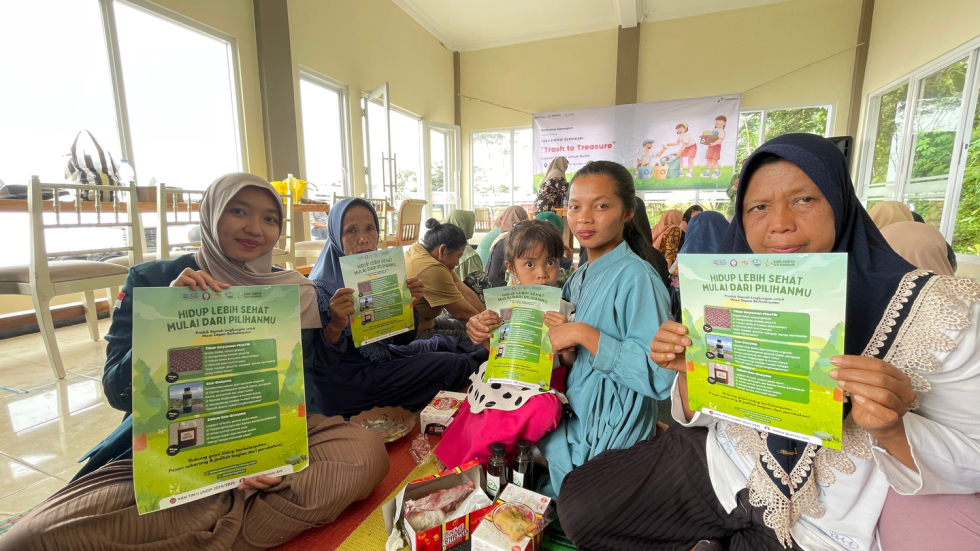
SEMARANG – A total of 17 students from the 167th Thematic Community Service Program (KKNT) at Diponegoro University (UNDIP) are implementing an innovative multidisciplinary program titled “Implementation of the Zero Waste System in Tourist Villages thru Sustainable Agricultural and Household Waste Management” in Kemambang Village, Banyubiru District, Semarang Regency, Central Java. This multidisciplinary program is designed to address the various waste management challenges in the Sitaring tourist area, Kemambang Village. This village has great agricultural and tourism potential, but it lacks a structured waste management system. Therefore, students from various faculties are involved in the development of a community-based zero waste system.
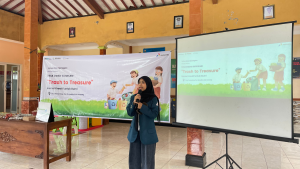
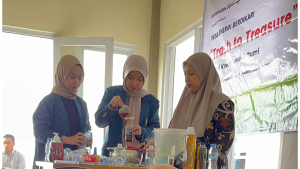
Thru this activity, UNDIP students developed various programs such as training on making compost, eco-enzymes, and soap from organic waste, as well as training on recycling plastic waste into valuable craft products. They also developed waste management SOPs, designed 3R waste bins, created a digital recording system for waste banks, and designed a zero-waste tourism area layout based on architecture and technology. The village coordinator for KKNT 167, Shofiyah Nur Azizah, stated that this program was designed with a cross-disciplinary approach and involved the active participation of village residents. “We want to build a zero-waste system that not only finishes during the KKN period but can also be continued by the community,” he said.
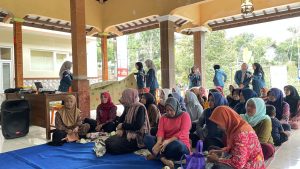
This program is also supported by highly enthusiastic village officials and community members. Housewives actively participate in training, rural youth are involved in waste monitoring teams, and other residents assist in soap and compost making practices. The village head of Kemambang positively welcomed the presence of UNDIP students in his village. We feel helped by this program. “Hopefully, the system pioneered by the students can continue to be developed and provide long-term benefits for our village,” he said.
The Head of the P2KKN UNDIP, Adnan Fauzi, S.T., M.Kom., stated that the implementation of KKN is an important part of the learning process. He emphasized that students are not only tasked with applying their knowledge but also honed to be able to interact directly with the community. “Through KKN, students learn to recognize real-world conditions, build communication with residents, and participate in finding solutions to local problems.” “This is an important experience that you don’t get in the classroom,” he said.
This program is also aligned with the Sustainable Development Goals (SDGs), particularly points 11 (Sustainable Cities and Communities), 12 (Responsible Consumption and Production), and 13 (Climate Action). With a spirit of collaboration and a cross-disciplinary approach, UNDIP students are striving to make Kemambang Village a model for eco-friendly, zero-waste tourism villages that can be replicated in various other regions in Indonesia.