
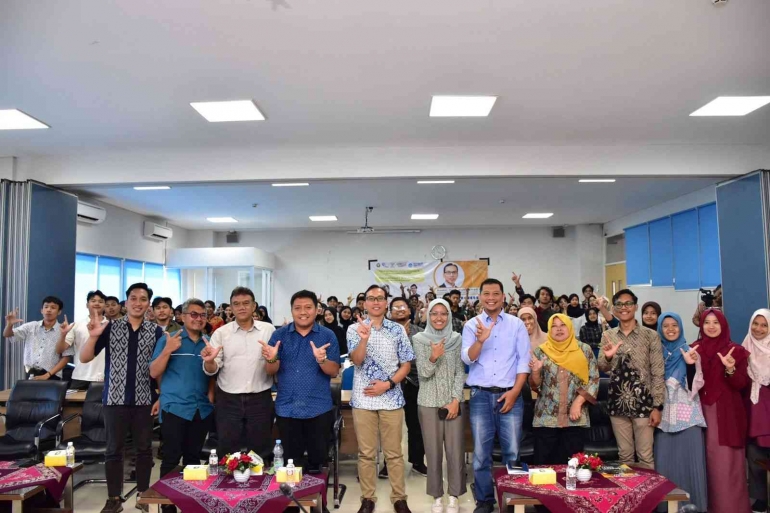
Semarang – The Industrial Chemical Engineering Technology (TRKI) study program at the Vocational School of Diponegoro University (UNDIP) will hold a Visiting Professor event from October 23 to 25, 2024. The event took place in Building A, 4th Floor, Conference Room, Vocational School of UNDIP, and was attended by students and lecturers with great enthusiasm. This event was led by Hermawan Dwi Ariyanto, ST, M.Sc, Ph.D, as the person in charge (PIC), and featured Assoc. Prof. Muhammad Aziz from Tokyo University as the keynote speaker, with Vierina Putri Anindya serving as the master of ceremonies.
The event is divided into three sessions with different themes, providing new insights and practical guidance for participants in developing scientific research and writing.
Session 1: “Advanced Chemical Looping Technology for Clean Hydrogen Production” The first session, held on October 23, 2024, focused on the theme of Advanced Chemical Looping Technology for Clean Hydrogen Production. The event began at 08:45 WIB and lasted until 12:00 WIB. In her remarks, Dr.Eng. Vita Paramita, Vise Dean II of the UNDIP Vocational School, emphasized the importance of technological innovation in supporting the development of clean energy. Prof. Muhammad Aziz, as the speaker, presented chemical looping technology as a solution for clean hydrogen production, from the basic concept to its application in the energy industry. This session was attended by students and lecturers from the Vocational School of UNDIP, particularly the TRKI Study Program, who were very enthusiastic about the in-depth explanation of the technology.
Session 2: “Coaching in Writing Scientific Articles” On October 24, 2024, the second session titled “Coaching in Writing Scientific Articles” was held from 13:45 WIB to 16:00 WIB. This session aimed to provide training to participants on how to write good and effective scientific articles, as well as prepare for publication in reputable international journals. Prof. Aziz provided guidance on selecting research topics, writing methodology, and tips for improving manuscript quality before publication. The material presented was very beneficial, especially for students interested in writing scientific articles and publishing them in international journals.
Session 3: “From Dream to Reality: Navigating the Path to Japanese Scholarships”
The final session, held on October 25, 2024, was themed “From Dream to Reality: Navigating the Path to Japanese Scholarships.” This session began at 08:00 WIB and concluded at 11:10 WIB, focusing on motivation and practical guidance for students interested in pursuing studies in Japan thru scholarships. Prof. Aziz shared his experiences and tips for obtaining scholarships in Japan, as well as the steps needed to prepare for a smooth application process. This session was warmly received by students interested in pursuing further studies abroad, particularly in Japan.
Each session concludes with a Q&A session, allowing participants to further discuss the topics presented with the speakers. The questions asked were very diverse, covering technical aspects of research to practical tips for achieving academic and professional goals. One of the participants, Nurika, shared her positive impressions of the overall event. “I was very inspired by the material presented, especially about chemical looping technology for clean hydrogen production. This topic is very relevant to the increasingly important issue of clean energy. The session on writing scientific articles was also very helpful in preparing for future scientific publications. Additionally, the session about Japanese scholarships motivated me to start taking steps toward further studies abroad. “This event truly provided new insights and clear direction for my academic career development,” Nurika stated.
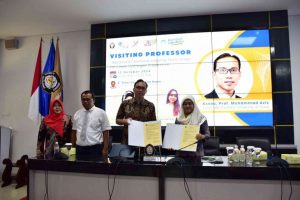
The event concluded with a thank you from the Vocational School of UNDIP to Prof. Muhammad Aziz for his willingness to share his invaluable knowledge and experience. This Visiting Professor activity is expected to boost the spirit of international research for students and lecturers at UNDIP, and to encourage broader academic collaboration in the future.