
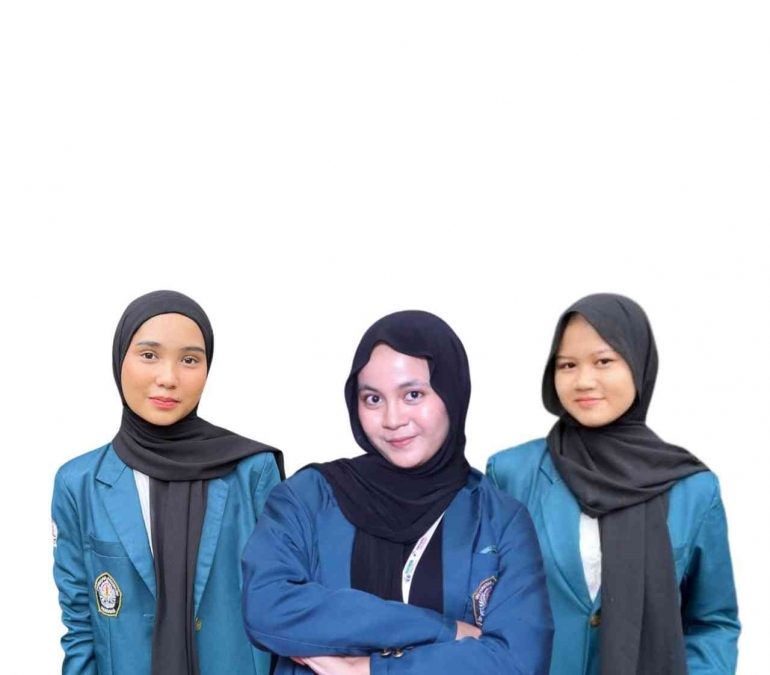
Innovation continues to be a driving force in improving the efficiency and productivity of the water sector. The latest breakthrough comes from Team HADEH (Hydro-Aquatic Development for Eco-Friendly Habitats), consisting of Ade Syahri Fitria Pulungan, Haliza Ramadiani, and Hilda Zahir Tsanisiwi. Thanks to this breakthrough, Team HADEH represented Diponegoro University at the national-level Aprotech Fair IPB 2024 competition, which was attended by teams from various universities across Indonesia. Ade Syahri Fitria Pulungan, a 2022 student from the Vocational TRKI program at Diponegoro University, commonly known as Ade, stated that the HADEH Team successfully represented Diponegoro University by winning two awards simultaneously: 1st place in the poster competition and 3rd place in the essay competition. Where the concept is the development of an integrated RAS system, Filtsan: Sensor-based chitosan filter tray. This development promises a significant step forward in optimizing fish growth conditions, quickly identifying problems, and taking necessary actions to maintain fish health. Beside operational efficiency, automating processes in Filtsan also helps reduce the physical workload of fish farmers, Ade said.
Meanwhile, Haliza Ramadiani, commonly called Haliza, revealed that one of the key components of this system is the use of innovative pool pH sensors. This sensor is specifically designed to detect pH increases in pools, which is a sign of higher concentrations of unionized ammonia (NH) at high pH, increasing its toxicity. When the pool’s pH is greater than 7, the sensor will signal the pump to drain water from the pool to Filtsan: Chitosan filter tray. In the first tray, rocks or gravel are selected to capture large particles (leaves, mud, and fish waste) so that the subsequent filtration process is more optimal. In the second tray, there is coconut fiber (cocofiber) that can filter fine particles and organic matter. The third tray contains a chitosan membrane derived from aquatic shell waste. This not only helps maintain the water balance used for the fish, but also, with responsive monitoring, allows for quick action in maintaining the overall health of the fish, said Haliza, the winner of Pertamina 2024.
Hilda Zahir Tsanisiwi, who is usually called Hilda, also added that innovation doesn’t stop there. This development concept also includes exploring the combination of aquatic shell waste in the production of chitosan membranes. Aquatic shell waste contains important compounds with the ability to adsorb ammonia due to its amino and hydroxyl groups. To date, research combining various types of aquatic shell waste into a single membrane system is still rare.
Therefore, Filtsan is present with a material exploration of aquatic shell waste, aiming to produce green membrane technology that provides innovative and sustainable solutions for clean water treatment and integrated waste management, explained Hilda, who was once awarded Best Poster USU 2024. It’s also important to note that Mr. Endy Yulianto, S.T., M.T., as the Head of the D4 Industrial Chemical Engineering Technology Study Program, played a very significant role and provided continuous support to the HADEH team. Thanks to his encouragement and advice, we were able to continue innovating in ways that could have a positive impact on the wider community, Ade concluded.