

Salatiga, August 7-8, 2024 – The Vocational School of Diponegoro University (SV UNDIP) successfully held a curriculum development workshop for the Industrial Chemical Engineering Technology (TRKI) program at Graha Wahid Salatiga. This two-day event aims to improve the quality of education and align the curriculum with the needs of Industry 4.0. On the first day, August 7, 2024, the workshop began with a discussion of the learning design for the TRKI study program, presented by Mr. Endy Julianto, S.T., M.T., as the Head of the TRKI Study Program. He emphasized the importance of developing a curriculum that aligns with the Indonesian National Work Competency Standards (SKKNI) and Semester Learning Plans (RPS). The emphasis on developing a curriculum that aligns with SKKNI is expected to strengthen the connection between the material taught and the needs of the industrial world. In a rapidly changing world, colleges are required to produce graduates who not only possess strong knowledge but also have skills relevant to the needs of the job market. With that, Mr. Endy also emphasized the need for effective cooperation strategies with industry to improve the quality of education in the TRKI Study Program, as well as to prepare for the future opening of S2 and S3 double degree programs and to prepare students to face future challenges.
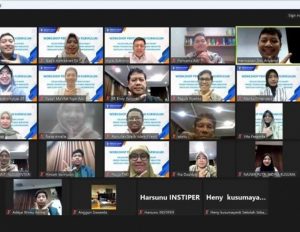
The next material was presented by Prof. Budi, Dean of the UNDIP Vocational School, who discussed the preparation of Outcome-Based Education (OBE)-based RPS. Prof. Budi explained how the curriculum must be evaluated and adjusted to industry needs to ensure that graduates have relevant skills. This explanation was followed by Mrs. Anafil Wyndria S.E., M.Acc., who provided in-depth insights into the effective RPS format and learning achievement assessment. Next, the third material session was presented by Mr. Harsunu Purwoto, M.Eng., from the INSTIPER Agricultural Program, discussing the strategy for “Creating Excellent Human Resources for the Palm Oil Industry that are Globally Competitive in the Era of Industry 4.0.” Mr. Harsunu emphasized curriculum alignment with industry needs and the importance of collaboration with companies in providing field practice and internships, offering insights into how a relevant curriculum supports student readiness in the global market. Investing in human resource development is a long-term investment that will bring significant benefits to the palm oil industry and the country.
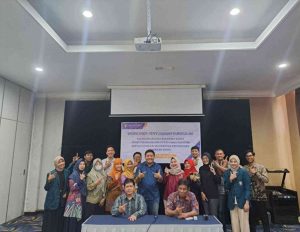
In the final session of the first day, the fourth material was presented by Mr. Agus Sutrisno, S.P., M.M. from PT Bumitama Gunajaya Agro, discussing “Curriculum Design for Palm Oil Industrial Processing Based on SKKNI.” Mr. Agus explained the impact of supply and demand factors on the palm oil industry and the company’s support for academic activities, emphasizing the importance of industry understanding for students’ career success. The conclusion from this fourth speaker is that designing a palm oil industrial processing curriculum based on SKKNI is an important step toward producing graduates who are ready for work and capable of contributing to the sustainable development of the palm oil industry. With a quality curriculum, the TRKI program can produce superior human resources capable of competing globally. Day two, August 8, 2024, began with the fifth material, which was the closing of the workshop delivered by Ms. Ida, the Vise Dean 1. He presented the latest policies in the curriculum, including changes to the grading policy that allow students with a C grade to graduate cum laude. Additionally, the new curriculum includes a 1-credit English course for three consecutive semesters, with the goal of obtaining a TOEFL certificate in the fourth semester. KKN is now an elective course in accordance with SKNI and SPMI policies. Mrs. Ida also explained the reorganization of lecturers to ensure effective teaching in the fields of oleochemistry, oleofoods, and separation engineering.
A competency-based curriculum is an approach that emphasizes the mastery of the competencies needed by graduates. This workshop discusses the steps in designing and developing an effective competency-based curriculum, as well as how to ensure that graduates possess competencies aligned with industry standards. With comprehensive material delivery and the integration of various perspectives, this workshop is expected to strengthen cooperation with industry, open up internship and field practice opportunities, and continuously improve the quality of education in the TRKI SV UNDIP Study Program, so that graduates can compete effectively at the national and international levels. [Contributor: Najwa].