
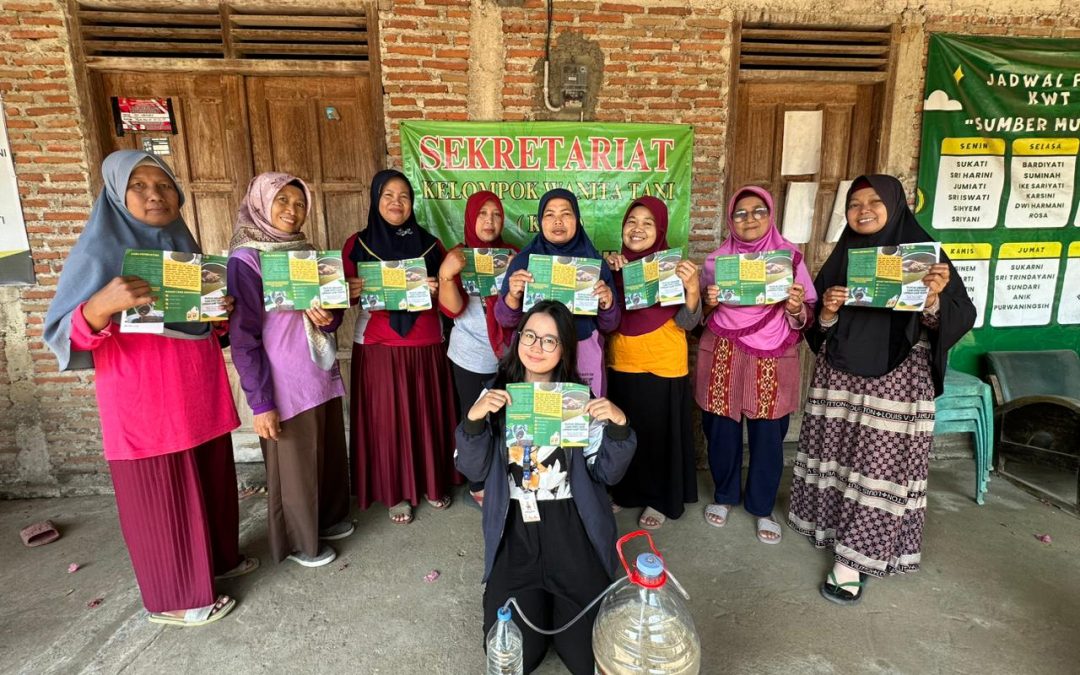
Tempe, as one of the products from micro, small, and medium enterprises (MSMEs) in Pojok Village, currently does not have an adequate liquid waste treatment system. Liquid waste generated from the tempeh production process is a significant environmental problem. As a fermented soybean product, tempeh not only produces tempeh as its main product but also liquid waste that can pollute the environment if not managed properly. Tempe liquid waste, which often contains various organic substances and microbes, has potential that is not yet fully utilized in the context of waste management. One innovative solution to this problem is to process tempeh liquid waste into Liquid Organic Fertilizer (LOF). On August 4, 2024, the Regular KKN Team II students from 2024 stationed in Pojok Village, Tawangsari District, Sukoharjo Regency, implemented a monodisciplinary program titled “Utilization of Tempe Liquid Waste into Liquid Organic Fertilizer (POC).” This program, conducted by students from the Industrial Chemical Engineering Technology program at the Vocational School Faculty, was focused on the “Sumber Mulyo” Women Farmers Group (KWT) in Pojok Village. This program began with an introduction to liquid organic fertilizer and the potential of tempeh liquid waste as fertilizer. This was followed by a demonstration of how to make liquid organic fertilizer. The manufacturing process involves preparing a 15L gallon filled with half a gallon of liquid tempeh waste from nearby SMEs. The additive is molasses/cane syrup, which is rich in sugar, minerals, and vitamins, serving as an energy source for the microorganisms involved in the fermentation process.
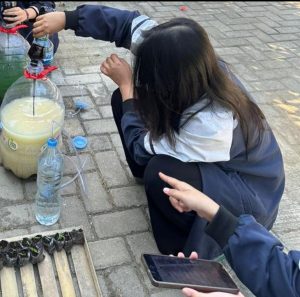
The next ingredient is Yakult, because it contains probiotic bacteria, especially Lactobacillus Casei. This bacteria plays an important role in the fermentation process and produces various compounds beneficial to plants. 300ml of molasses and 1 bottle of Yakult were added to the gallon and stirred until evenly mixed. A hose is connected to the gallon lid and attached to a bottle containing water to prevent the fertilizer from exploding during fermentation. Fermentation is carried out for 7-14 days, and fertilizer is applied by mixing 200ml of POC with 800ml of water and then applying it to vegetable plants. The demonstration was interspersed with a Q&A session, and the KWT participants were very enthusiastic and active in asking questions and seeking deeper understanding. “This liquid organic fertilizer is very good and can be applied to plants at home or in the KWT. The materials are also easy to find and inexpensive, making it an economical and practical solution,” said Mrs. Dwi, Chair of the KWT. It is hoped that the treatment of tempeh liquid waste can reduce negative impacts on the environment, such as soil and water pollution, which can lead to ecosystem damage. The program “Utilization of Tempe Liquid Waste into Liquid Organic Fertilizer (LOF)” is expected to become a sustainable program for the Women Farmers Group (KWT) of Pojok Village and provide a positive example in managing tempe liquid waste from nearby MSMEs