
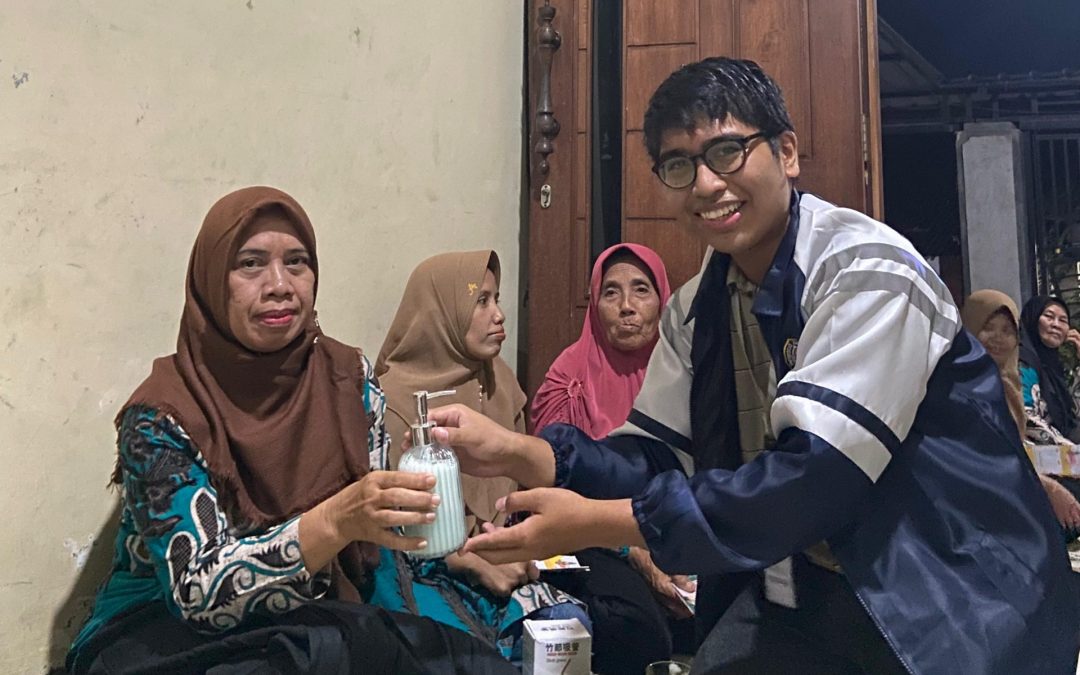
Bekonang Village, Mojolaban District, Sukoharjo Regency, June 11, 2024 – On Wenesday, June 11, 2024, Gabriel Christoffel (UNDIP Field Study and Community Service) conducted an innovation activity in Bekonang Village, Mojolaban District, Sukoharjo Regency. The hand soap-making training program from used cooking oil in Bekonang Village aims to provide the community with knowledge and skills on how to make hand soap from used cooking oil. It is hoped that this training can contribute to efforts to preserve the environment and improve public health.
Used cooking oil, which is leftover used frying oil, has a significant negative impact if disposed of improperly, such as soil contamination that can hinder plant growth, and water pollution that can disrupt aquatic ecosystems. Therefore, despite its negative impact when disposed of carelessly, used cooking oil has excellent potential to be processed into beneficial products, one of which is hand soap.
In an effort to preserve the environment and improve public health, Gabriel Christoffel, a student of Industrial Chemical Engineering at Diponegoro University, organized an innovative program to make hand soap from used cooking oil. In this training, the community is invited to make hand soap, starting from processing used cooking oil back into pure oil, mixing the necessary ingredients for hand soap production, and finally producing hand soap. Additionally, the community is also given socialization about the importance of managing used cooking oil into useful products like hand soap.
This training involved the community of Bekonang Village, particularly the PKK mothers, and was held at the RT head’s house, specifically in RT 01 RW 01, Mojosari Hamlet. The training event took place on Wednesday, June 11, 2024, from 7:30 PM to 9:30 PM WIB. This activity received a positive response and active participation from the village residents.
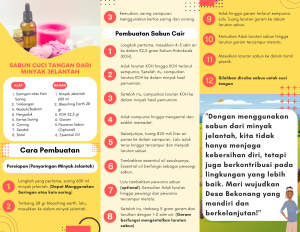
This activity began with an explanation of what used cooking oil is, how dangerous it is if disposed of improperly, and then moved on to the hand soap-making process from used cooking oil, presented in video format displayed thru a projector. The steps for making hand soap from used cooking oil are as follows:
Preparation (Filtering Used Cooking Oil):
- The first step is to filter 600 ml of used cooking oil. (You can use a strainer or filter cloth)
- Weigh 28 g of bleaching earth, then add it to the used cooking oil.
- Next, filter the mixture using filter paper and a funnel.
Making Liquid Soap
- First, add 4-5 tablespoons of water to 32.5 grams of Potassium Hydroxide (KOH).
- Stir the KOH solution until the KOH is completely dissolved. Then, mix the KOH solution into the purified oil.
- After that, mix the KOH solution into the purified oil.
- Stir the mixture until it thickens and slightly solidifies.
- Next, pour 825 milliliters of hot water into the mixture. Then, continue stirring until it is mixed and becomes a soap solution.
- Add essential oil as needed. Essential oil functions as a soap fragrance.
- Then add soap coloring (optional). After that, stir the solution until the fragrance and coloring are evenly mixed.
- After that, weigh 5 grams of salt and dissolve it with 1-2 tablespoons of water. (Salt functions to thicken the soap solution)
“By utilizing used cooking oil to make hand soap, beside reducing the harmful impact caused by used cooking oil if disposed of carelessly, we can also create an environmentally friendly hand soap product made from used cooking oil, thus educating the public to keep the environment healthy and clean,” said Etik, one of the PKK members. This work program is expected to inspire the people of Bekonang village to process used cooking oil into useful products, one of which is hand soap, while also raising awareness of the importance Gabriel Christoffel expressed his great hope that this innovative program can be implemented sustainably in Bekonang village, Mojolaban sub-district, Sukoharjo district. With this innovative step, it is hoped that the Bekonang village community can contribute to creating a healthier and cleaner environment.